




Spectrometer-Verified Red Light Therapy Testing | Mychondria
Accurate dosing in red light therapy depends on knowing how much light a device actually produces.
That is why Mychondria uses a HOPOO HPCS-330Pro spectrometer to verify the spectral output and irradiance of our red light therapy devices.
The MyLight MOVE 2.0, MIDI 2.0, MAX 2.0 and PRO 2.0 have each undergone spectrometer testing at multiple treatment distances. The results, testing methodology and original measurement data are published so that our specifications can be independently reviewed.
Instrument: HOPOO HPCS-330Pro
Instrument serial number: 334954588
Spectral measurement range: 380–1000 nm
Testing date: September 13, 2026
Warm-up: Device and spectrometer warmed up for 10 minutes before testing
Spectrometer-verified red light therapy devices
The irradiance figures below are the spectrometer-measured spectral irradiance values recorded during testing. Measurements were taken with the device operating at 100% output, with all available wavelengths enabled, and the spectrometer sensor positioned at the center of the treatment area.
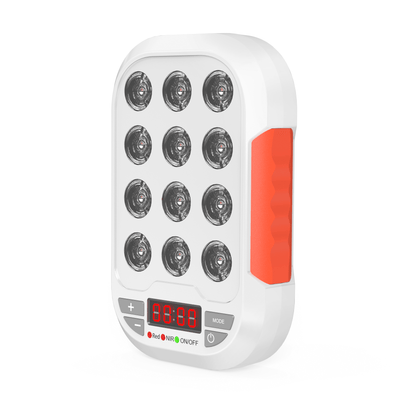
MyLight MOVE 2.0
The MyLight MOVE 2.0 uses 660 nm red light and 850 nm near-infrared light.
| Measurement distance | Spectral irradiance |
|---|---|
| 2 inches (5.1 cm) | 58.390 mW/cm² |
| 4 inches (10.2 cm) | 39.257 mW/cm² |
| 8 inches (20.3 cm) | 15.030 mW/cm² |
| 12 inches (30.5 cm) | 7.116 mW/cm² |
Measured flicker: 0%
Measured flicker frequency: 0 Hz
View the MyLight MOVE 2.0 Spectrometer Verification Report
View the full MyLight MOVE 2.0 spectrometer verification page
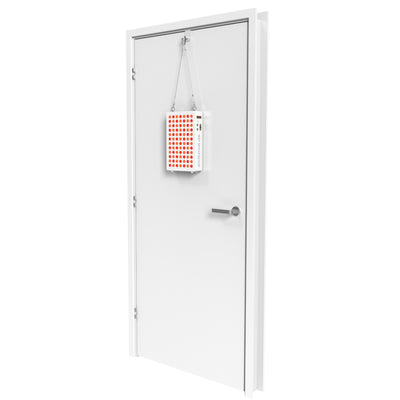
MyLight MIDI 2.0
The MyLight MIDI 2.0 uses 630 nm and 660 nm red light together with 850 nm near-infrared light.
| Measurement distance | Spectral irradiance |
|---|---|
| 6 inches (15.2 cm) | 89.239 mW/cm² |
| 8 inches (20.3 cm) | 80.496 mW/cm² |
| 12 inches (30.5 cm) | 61.058 mW/cm² |
Measured flicker: 0%
Measured flicker frequency: 0 Hz
View the MyLight MIDI 2.0 Spectrometer Verification Report
View the full MyLight MIDI 2.0 spectrometer verification page
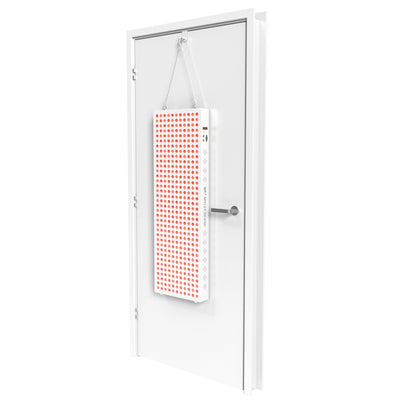
MyLight MAX 2.0
The MyLight MAX 2.0 uses 630 nm and 660 nm red light together with 850 nm near-infrared light.
| Measurement distance | Spectral irradiance |
|---|---|
| 6 inches (15.2 cm) | 71.937 mW/cm² |
| 8 inches (20.3 cm) | 69.320 mW/cm² |
| 12 inches (30.5 cm) | 63.340 mW/cm² |
Measured flicker: 0%
Measured flicker frequency: 0 Hz
View the MyLight MAX 2.0 Spectrometer Verification Report
View the full MyLight MAX 2.0 spectrometer verification page
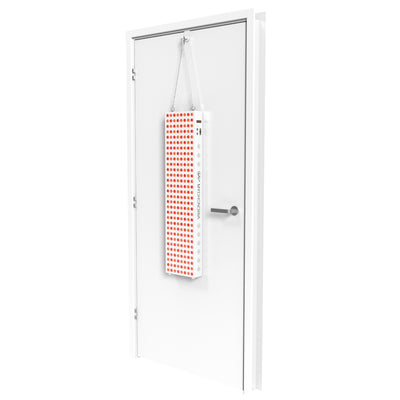
MyLight PRO 2.0
The MyLight PRO 2.0 uses 630 nm and 660 nm red light together with 850 nm near-infrared light.
| Measurement distance | Spectral irradiance |
|---|---|
| 6 inches (15.2 cm) | 66.202 mW/cm² |
| 8 inches (20.3 cm) | 63.314 mW/cm² |
| 12 inches (30.5 cm) | 60.724 mW/cm² |
Measured flicker: 0%
Measured flicker frequency: 0 Hz
View the MyLight PRO 2.0 Spectrometer Verification Report
View the full MyLight PRO 2.0 spectrometer verification page
MyLight MAXXED 2.0
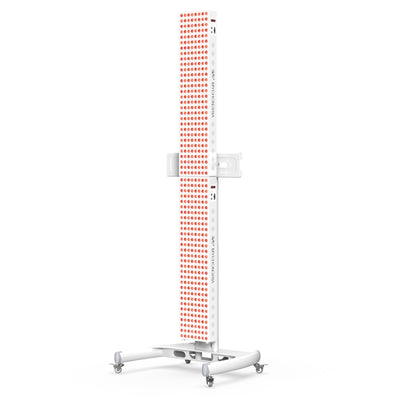
The MyLight MAXXED 2.0 is built from two MyLight MAX 2.0 panels on a mobile stand. Each panel is the same individually spectrometer-verified MyLight MAX 2.0 unit, so the per-panel spectral irradiance and wavelength figures match the standalone MyLight MAX 2.0 data below. The two-panel setup increases total treatment coverage rather than per-panel intensity.
| Measurement distance | Spectral irradiance (per panel) |
|---|---|
| 6 inches (15.2 cm) | 71.937 mW/cm² |
| 8 inches (20.3 cm) | 69.320 mW/cm² |
| 12 inches (30.5 cm) | 63.340 mW/cm² |
Measured flicker: 0%
Measured flicker frequency: 0 Hz
View the full MyLight MAXXED 2.0 spectrometer verification page
MyLight ELITE 2.0
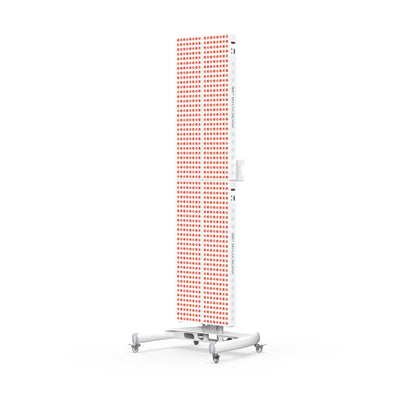
The MyLight ELITE 2.0 is built from four MyLight MAX 2.0 panels on a mobile stand. As with the MAXXED 2.0, each panel is the same individually spectrometer-verified MyLight MAX 2.0 unit, so the per-panel spectral irradiance and wavelength figures match the standalone MyLight MAX 2.0 data below. The four-panel setup increases total treatment coverage rather than per-panel intensity.
| Measurement distance | Spectral irradiance (per panel) |
|---|---|
| 6 inches (15.2 cm) | 71.937 mW/cm² |
| 8 inches (20.3 cm) | 69.320 mW/cm² |
| 12 inches (30.5 cm) | 63.340 mW/cm² |
Measured flicker: 0%
Measured flicker frequency: 0 Hz
View the full MyLight ELITE 2.0 spectrometer verification page
How the testing was performed
Each device was tested using the same controlled process to make the measurements as consistent and transparent as possible.
- The MyLight device and HOPOO HPCS-330Pro spectrometer were allowed to warm up for 10 minutes.
- The device was set to 100% output with all available wavelengths enabled.
- The spectrometer sensor was positioned at the center of the treatment area.
- Measurements were taken at the specified treatment distances.
- Spectral irradiance and spectral output were recorded using the HPCS-330Pro across its 380–1000 nm measurement range.
- Flicker measurements were recorded using the spectrometer's flicker measurement function.
What does "spectrometer verified" mean?
A spectrometer measures light across individual wavelengths rather than simply reporting a single broadband power reading.
This allows us to examine both how much optical energy is being produced and where that energy appears across the light spectrum.
For a red light therapy device, this is particularly useful because the output is concentrated around specific red and near-infrared wavelengths rather than spread evenly across the visible spectrum.
Our verification reports therefore include both the measured spectral irradiance in mW/cm² and the measured spectral output of the device.
Why we publish the exact numbers
Red light therapy protocols are often based on light dose, typically expressed in joules per square centimeter (J/cm²).
Calculating that dose accurately requires knowing the irradiance reaching the treatment area. For this reason, Mychondria publishes the actual spectrometer measurements rather than simply describing devices as "high powered".
For example, knowing that a device delivers 89.239 mW/cm² at a particular distance makes it possible to calculate treatment dose much more precisely than relying on a general power claim.
Spectrometer testing versus solar power meter testing
Broadband solar power meters and spectrometers are different instruments designed to measure light in different ways.
A solar power meter produces a broadband reading across the wavelengths to which its sensor responds. A spectrometer, by comparison, measures the spectral distribution of the light and calculates radiant energy across the measured wavelength range.
Because red light therapy devices emit concentrated peaks at specific wavelengths, the measurement produced by a broadband meter can differ substantially from a spectrometer measurement.
For dosing and technical verification, Mychondria therefore publishes spectrometer-measured spectral irradiance.
Our testing equipment
Testing was performed using the following instrument:
- Manufacturer: Hangzhou Hopoo Light & Color Technology Co., Ltd.
- Model: HPCS-330Pro
- Serial number: 334954588
- Spectral measurement range: 380–1000 nm
- Software version: 2.0.4
The 380–1000 nm measurement range includes all wavelengths used in the MyLight devices tested on this page.
Full verification reports and raw test data
Transparency is important to us, so we do not expect customers to simply take our published specifications at face value.
Each product has a complete Spectrometer Irradiance Verification Report showing the test conditions, measured irradiance, spectral output, flicker measurements and instrument information.
The original raw HPCS-330Pro spectrometer reports for each individual distance measurement are also available for review.
This allows customers, researchers and reviewers to inspect the underlying data behind the specifications published on our website.
Frequently asked questions
Does Mychondria use a spectrometer to test its red light therapy devices?
Yes. Mychondria uses a HOPOO HPCS-330Pro spectrometer to measure and verify the spectral irradiance and wavelength output of the MyLight MOVE 2.0, MIDI 2.0, MAX 2.0 and PRO 2.0.
Which Mychondria devices are spectrometer verified?
Published spectrometer verification is currently available for the MyLight MOVE 2.0, MyLight MIDI 2.0, MyLight MAX 2.0, MyLight PRO 2.0, MyLight MAXXED 2.0 and MyLight ELITE 2.0. The MAXXED 2.0 and ELITE 2.0 are built from individually verified MyLight MAX 2.0 panels.
What spectrometer does Mychondria use?
Testing was performed using a HOPOO HPCS-330Pro spectrometer with a spectral measurement range of 380–1000 nm. The instrument used for these tests has serial number 334954588.
Does Mychondria publish its spectrometer test results?
Yes. Mychondria publishes the measured irradiance at each tested distance, complete verification reports and the original raw spectrometer data used to produce those reports.
What is spectral irradiance?
Spectral irradiance describes the amount of radiant power delivered across the measured light spectrum. The overall irradiance figures shown on this page are reported in milliwatts per square centimeter (mW/cm²).
Do Mychondria devices have measurable flicker?
The spectrometer reports used for the tests published on this page recorded 0% flicker and a flicker frequency of 0 Hz.
Why does Mychondria use spectrometer measurements?
A spectrometer provides wavelength-resolved information about the light being emitted. This allows both spectral output and irradiance to be evaluated using the same measurement system and provides more detailed information than a single broadband power measurement.
Transparent measurements for accurate dosing
Our goal is simple: when we publish a specification for a Mychondria device, we want customers to be able to see where that number came from.
That is why our spectrometer verification includes the instrument used, measurement conditions, exact irradiance values, wavelength data, flicker measurements and original raw test reports.
You should not have to guess how the output of your red light therapy device was measured.